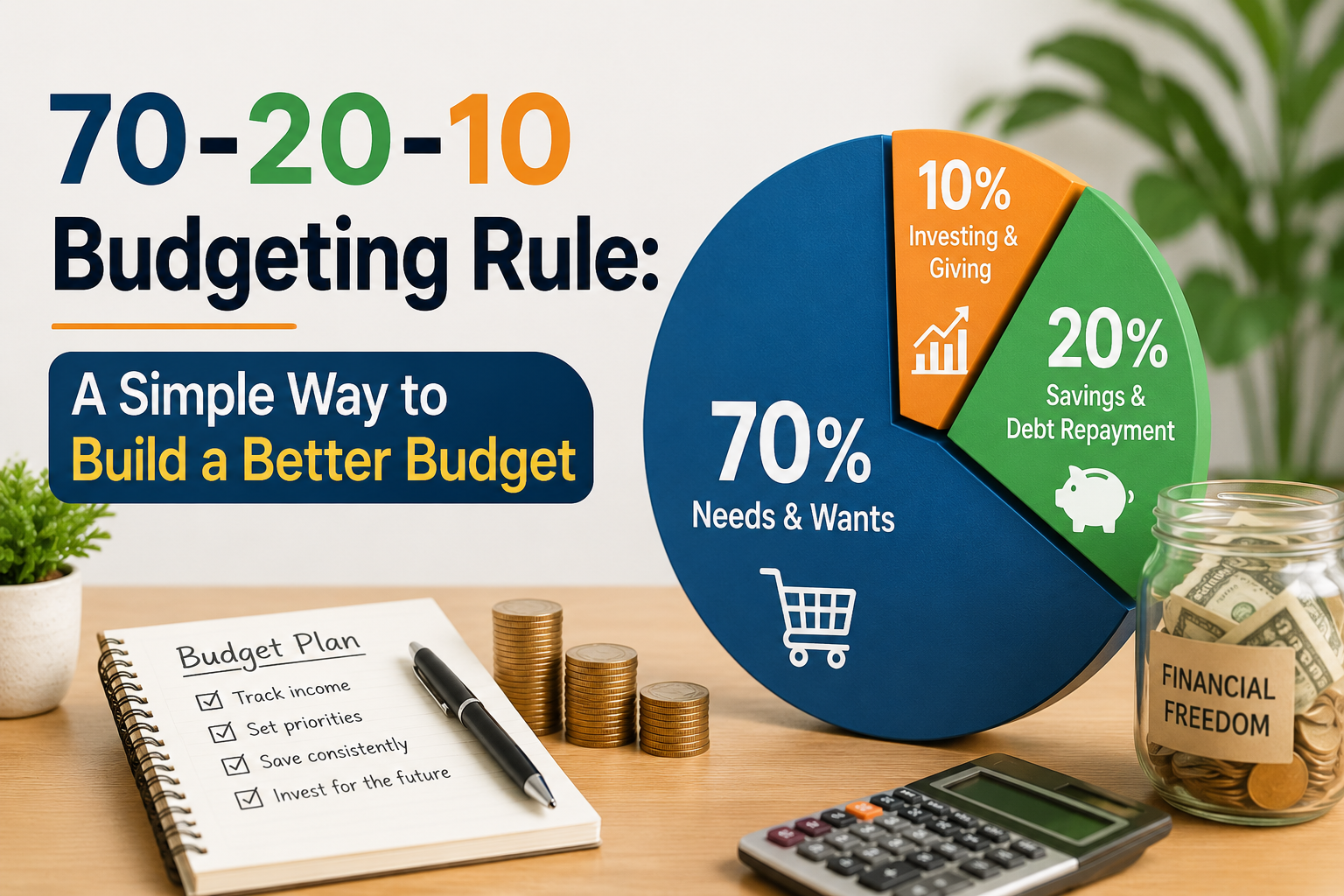

70-20-10 Budgeting Rule: A Simple Way to Build a Better Budget
The 70-20-10 budgeting rule is one of the easiest and most practical ways to manage money without making budgeting feel stressful or complicated. This simple budgeting method helps divide your income into spending, saving, and investing categories so you can build healthier financial habits over time.
Table of Contents
- What Is the 70-20-10 Budgeting Rule?
- How the 70-20-10 Budgeting Rule Works
- Benefits of the 70-20-10 Budgeting Rule
- Who Should Use This Budgeting Method?
- Tips to Follow This Financial Strategy
- Common Budgeting Mistakes
- Conclusion
What Is the 70-20-10 Budgeting Rule?
This budgeting system divides your monthly income into three categories. The first 70% goes toward daily expenses such as rent, groceries, transportation, utility bills, and entertainment. The next 20% is used for savings or debt repayment, while the final 10% is often used for investing or charitable giving.
Many people prefer this financial strategy because it creates balance without feeling too restrictive. Instead of tracking every small expense, the focus stays on improving overall money habits.
How the 70-20-10 Budgeting Rule Works
Using this money management method starts with calculating your monthly take-home income after taxes. Once you know how much money you actually receive, you divide it using the percentage structure.
For example, if your monthly income is $3,000:
- $2,100 goes toward living expenses and personal spending
- $600 goes toward savings or debt payments
- $300 goes toward investments or giving
This structure gives people flexibility while still encouraging financial discipline. Some months may naturally cost more than others, but the overall goal is to maintain consistency over time.
Benefits of the 70-20-10 Budgeting Rule
One major reason this budgeting plan became popular online is because of its simplicity. Many traditional budgeting systems are difficult to maintain because they require detailed tracking and constant monitoring.
This approach is easier to understand, especially for beginners who want a realistic way to improve their finances. It also encourages long-term saving habits and better awareness of spending behavior.
Another advantage is reduced financial stress. Having a clear structure often helps people feel more confident about handling bills, savings goals, and future financial plans.
Who Should Use This Budgeting Method?
This budgeting style can work for students, freelancers, young professionals, and families. It is especially useful for people who want a simple financial structure without tracking every expense manually.
However, people with extremely high debt or limited income may need to adjust the percentages slightly to fit their situation. Budgets should always remain realistic and flexible.
Tips to Follow This Financial Strategy
If you want this budgeting method to work long term, consistency matters more than perfection. Small financial improvements over time can create stronger money habits.
- Automate your savings whenever possible
- Review monthly spending regularly
- Avoid unnecessary impulse purchases
- Adjust your spending slowly instead of making extreme cuts
- Focus on long-term financial progress
Common Budgeting Mistakes
Many people fail at budgeting because they try to change everything too quickly. Overspending, ignoring savings, and comparing financial progress with others are common mistakes that create frustration.
The best way to improve your finances is by building consistent habits gradually. Even small improvements can create meaningful long-term results.
Conclusion
The 70-20-10 budgeting rule is a practical and beginner-friendly way to build healthier financial habits. By dividing income into spending, saving, and investing categories, this budgeting strategy creates a balanced structure that is easier to follow over time.
Whether your goal is saving more money, reducing debt, or gaining better control over your finances, this method offers a simple starting point that can make money management feel far less overwhelming.
URL Slug: 70-20-10-budgeting-rule