
Personal Finance Mistakes: Common Money Habits That Hurt Your Financial Future
Many people struggle financially not because they lack income, but because of repeated personal finance mistakes that slowly damage long-term stability. Small habits such as overspending, ignoring savings, or relying too heavily on debt can create serious financial problems over time.
The good news is that most money mistakes can be corrected with better awareness and consistent habits. Understanding common financial errors is often the first step toward building healthier spending patterns, stronger savings, and greater financial confidence.
Table of Contents
- Why Personal Finance Mistakes Matter
- Most Common Personal Finance Mistakes
- How Debt Becomes a Financial Problem
- Why Emergency Savings Are Important
- How to Build Better Money Habits
- Tips for Long-Term Financial Success
- Frequently Asked Questions
- Conclusion
Why Personal Finance Mistakes Matter
Financial decisions often seem small in the moment, but they can create major long-term consequences. Many common money problems begin with simple habits that gradually become difficult to control.
Repeated personal finance mistakes can affect:
- Monthly budgeting
- Savings growth
- Credit scores
- Retirement planning
- Stress and mental well-being
Improving financial habits does not require perfection. Even small positive changes can create meaningful results over time.
Most Common Personal Finance Mistakes
Understanding the most common money mistakes can help people avoid unnecessary financial pressure.
Living Beyond Your Means
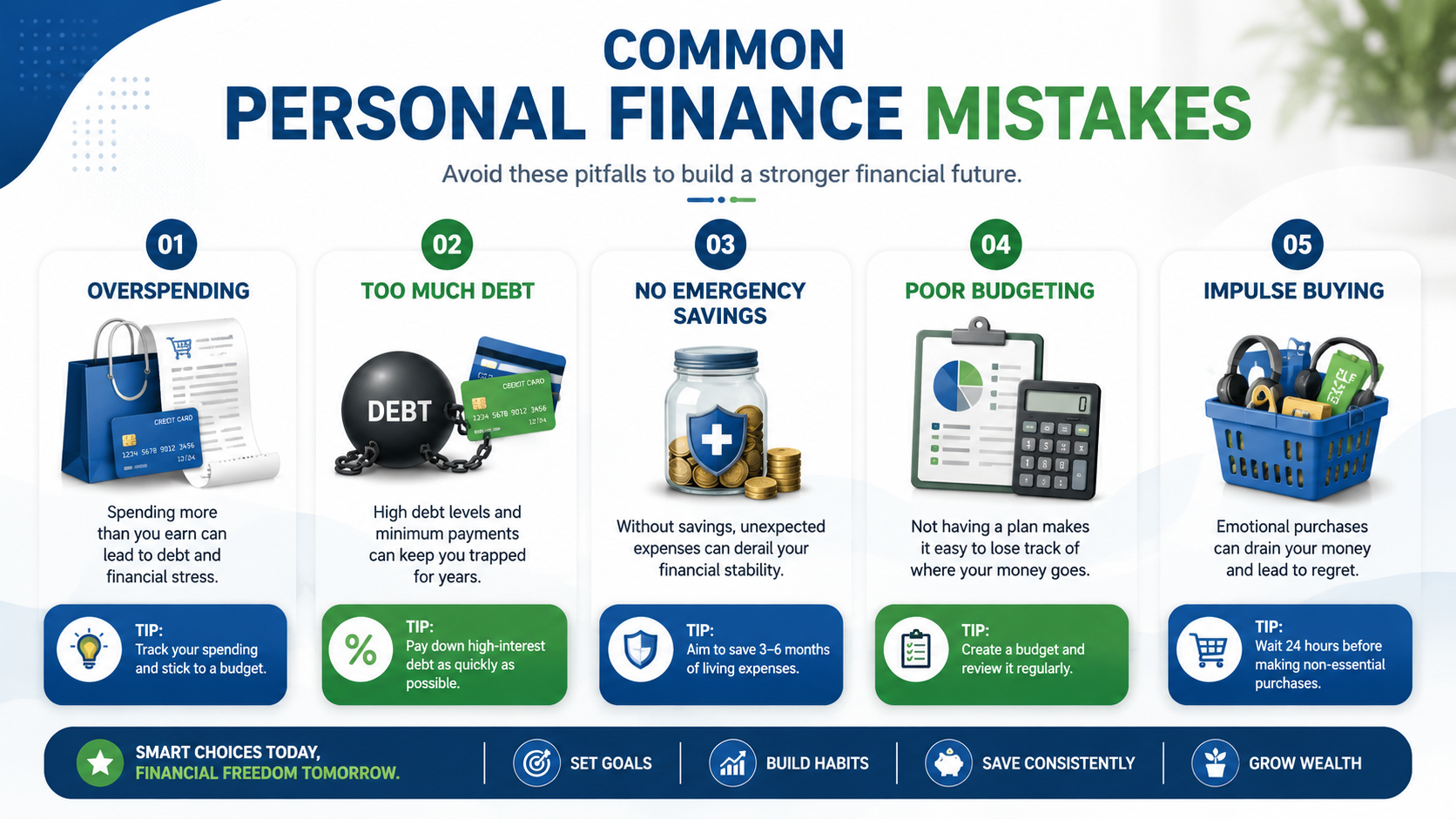
One of the biggest financial mistakes is consistently spending more money than you earn. Credit cards and buy-now-pay-later services can make overspending feel less serious at first, but debt often grows quickly.
Creating a realistic budget helps control unnecessary spending and improves financial awareness.
Ignoring Savings
Many people delay saving money because they believe they will start later when income improves. Unfortunately, waiting too long often makes financial goals harder to reach.
Even small monthly savings contributions can grow significantly over time through consistency.
Depending Too Much on Credit Cards
Credit cards can be useful financial tools when used responsibly, but carrying large balances creates expensive interest payments that damage long-term finances.
Paying balances regularly and avoiding unnecessary purchases helps reduce debt problems.
Not Tracking Expenses
Many people underestimate how much they spend on small daily purchases. Without expense tracking, money often disappears without clear understanding.
Simple budgeting apps or spreadsheets can improve financial visibility significantly.
How Debt Becomes a Financial Problem
Debt itself is not always bad, but unmanaged debt creates serious financial pressure over time. High-interest loans, unpaid credit cards, and unnecessary financing can quickly become overwhelming.
Some warning signs include:
- Only making minimum credit card payments
- Using debt to cover basic expenses
- Borrowing money frequently
- Struggling to pay monthly bills
Avoiding these personal finance mistakes often starts with reducing unnecessary borrowing and creating a realistic repayment plan.
Why Emergency Savings Are Important
Unexpected expenses happen to everyone. Medical bills, job loss, car repairs, or emergency travel can quickly create financial stress without savings.
An emergency fund helps provide:
- Financial protection during emergencies
- Reduced dependence on debt
- Greater financial confidence
- Improved long-term stability
Many financial experts recommend saving at least three to six months of basic living expenses when possible.
How to Build Better Money Habits
Overcoming personal finance mistakes requires consistent habits rather than extreme short-term changes.
Create a Realistic Budget
A budget should support daily life while helping control spending. Tracking income and expenses regularly creates better financial awareness.
Automate Savings
Automatic savings transfers make it easier to build consistent financial habits without relying entirely on motivation.
Avoid Impulse Spending
Waiting before making non-essential purchases often reduces unnecessary spending significantly.
Set Financial Goals
Clear goals create motivation and direction. Examples include:
- Paying off debt
- Building emergency savings
- Saving for retirement
- Purchasing a home
Breaking large goals into smaller steps usually feels more manageable.
Tips for Long-Term Financial Success
People who avoid major financial problems often follow simple habits consistently over many years.
- Spend less than you earn
- Review finances regularly
- Invest in financial education
- Plan for emergencies
- Focus on long-term financial growth
Financial improvement rarely happens overnight. However, small decisions repeated consistently can create major long-term results.
Frequently Asked Questions
What are the biggest personal finance mistakes?
Overspending, ignoring savings, carrying high-interest debt, and failing to track expenses are among the most common money mistakes.
How can beginners improve personal finances?
Starting with a simple budget, reducing unnecessary spending, and building emergency savings are strong first steps.
Why is saving money important?
Savings provide financial security during emergencies and help support long-term goals such as retirement or major purchases.
Conclusion
Avoiding common personal finance mistakes can improve financial stability, reduce stress, and create healthier long-term money habits. Small changes in budgeting, saving, and debt management often lead to meaningful financial progress over time.
Building stronger financial habits does not require perfection. Consistency, awareness, and realistic planning are usually far more important than making extreme short-term changes. By improving daily money decisions gradually, people can create a stronger financial future with greater confidence and stability.