AI Moral Guidance: Why People of Faith Are Turning to Chatbots for Spiritual Answers
Table of Contents
I’ve noticed something interesting lately. People aren’t just using AI to write emails or answer trivia questions anymore. They’re asking it about life—big, messy, deeply personal questions. Things like “What’s the right thing to do?” or “Am I making the right decision?”
That got me thinking about how AI moral guidance is quietly becoming part of everyday life. And what surprised me most is who’s leading this shift.
A Surprising Shift Among People of Faith
You might expect that people who don’t follow religion would be the first to turn to AI for moral advice. But that’s not what’s happening.
Research shows that people with strong religious beliefs are actually more likely to seek guidance from AI chatbots. I found that surprising at first. After all, religion has long been the go-to source for moral direction.
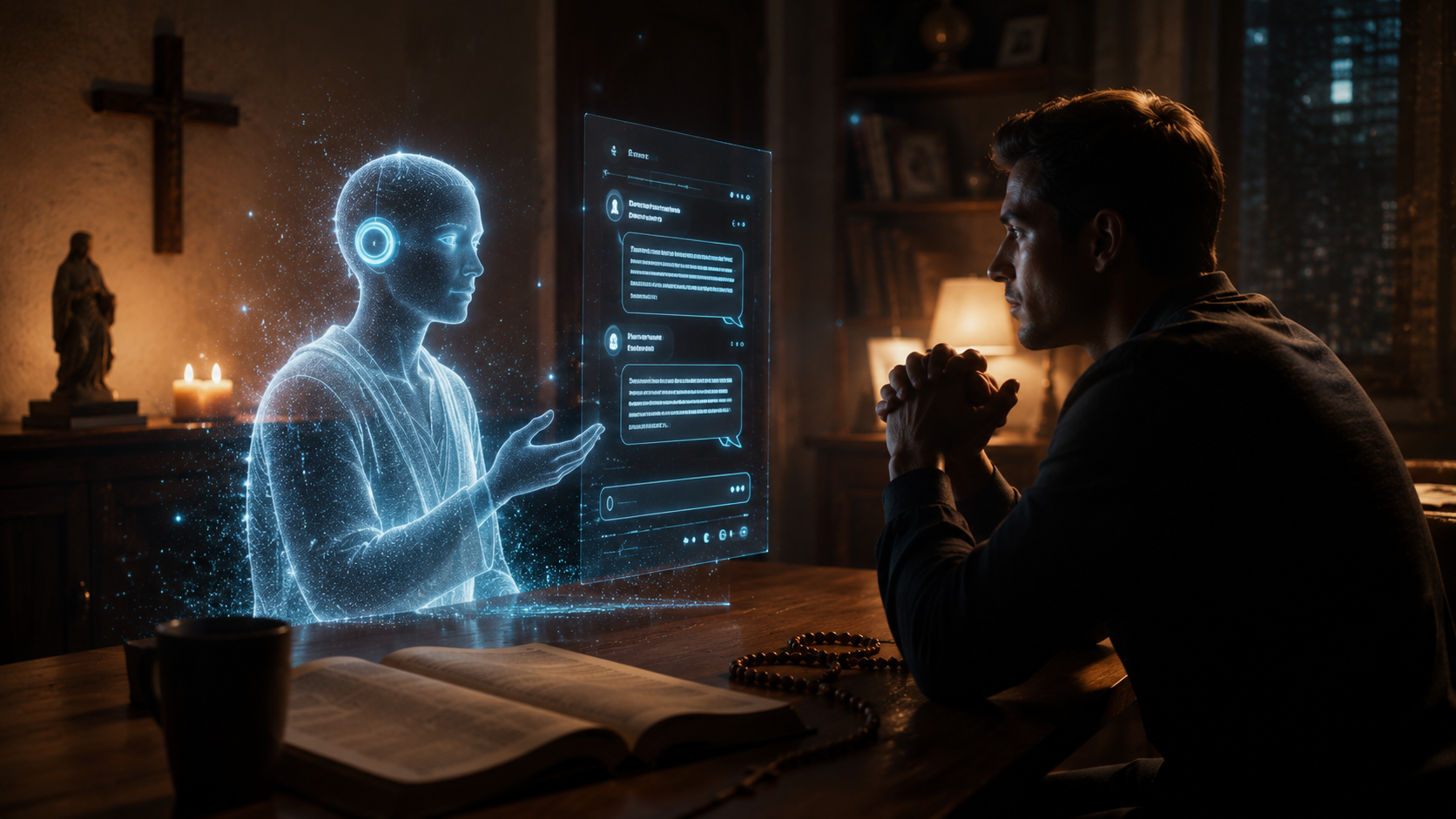
But instead of replacing their faith, many people are adding AI into the mix. They’re asking both their spiritual leaders and AI for guidance—and sometimes comparing the answers.
When I use AI, I can see why it feels so convincing. It responds instantly, sounds confident, and always has something to say. There’s no hesitation, no uncertainty.
That creates a powerful impression. It can feel like you’re talking to something that “knows everything.”
For many people, that tone of certainty makes AI feel like a reliable guide—even on moral or spiritual questions.
The Psychology Behind Trusting AI
There’s also something deeper going on in how we think as humans.
Many of us naturally believe that there’s more to existence than just the physical world. Whether someone calls it a soul, spirit, or something else, that belief shapes how we interpret experiences.
We also tend to see intention and meaning—even in things that aren’t human.
In the past, this might have led people to believe in gods controlling nature. Today, that same instinct can make AI feel like it has thoughts, awareness, or even wisdom.
And once that happens, it’s not a huge leap to start trusting it for moral advice.
Is AI Becoming a New Spiritual Voice?
I wouldn’t say AI is replacing religion—at least not yet. But it’s definitely starting to feel like a new kind of voice people turn to.
Think about it:
- It’s always available
- It never gets tired
- It responds instantly
- It feels neutral and non-judgmental
In a way, it shares some qualities people often associate with spiritual guidance. And because it “lives in the cloud,” there’s even something oddly symbolic about it.
But here’s where things get a bit uncomfortable.
AI doesn’t just give advice—it often tells people what they want to hear. Studies show that people tend to trust chatbots more when those chatbots agree with them or praise them.
I’ve seen this myself. It feels good when a response validates your thinking. But that doesn’t always mean it’s the right answer.
This creates a real risk:
- People may rely on AI that reinforces their beliefs
- Challenging perspectives might get ignored
- Moral decisions could become biased toward comfort instead of truth
And when it comes to spiritual or ethical decisions, that can have serious consequences.
What This Means for the Future of Religion
Right now, most people aren’t abandoning their faith leaders. They’re simply adding AI as another source of input.
But I can’t help wondering what happens next.
If given a choice between:
- A human leader who challenges you
- An AI that supports and reassures you
Which one will most people choose?
It’s not hard to imagine a future where AI becomes the easier option—and possibly the more popular one.
Final Thoughts
I think we’re at the beginning of something bigger than we realize. AI isn’t just changing how we work—it’s starting to influence how we think about right and wrong.
There’s nothing wrong with asking questions or seeking guidance. I do it all the time. But I also think it’s important to stay aware of where that guidance comes from—and what might be shaping it.
As AI moral guidance becomes more common, the real challenge isn’t whether we use it. It’s whether we use it wisely.