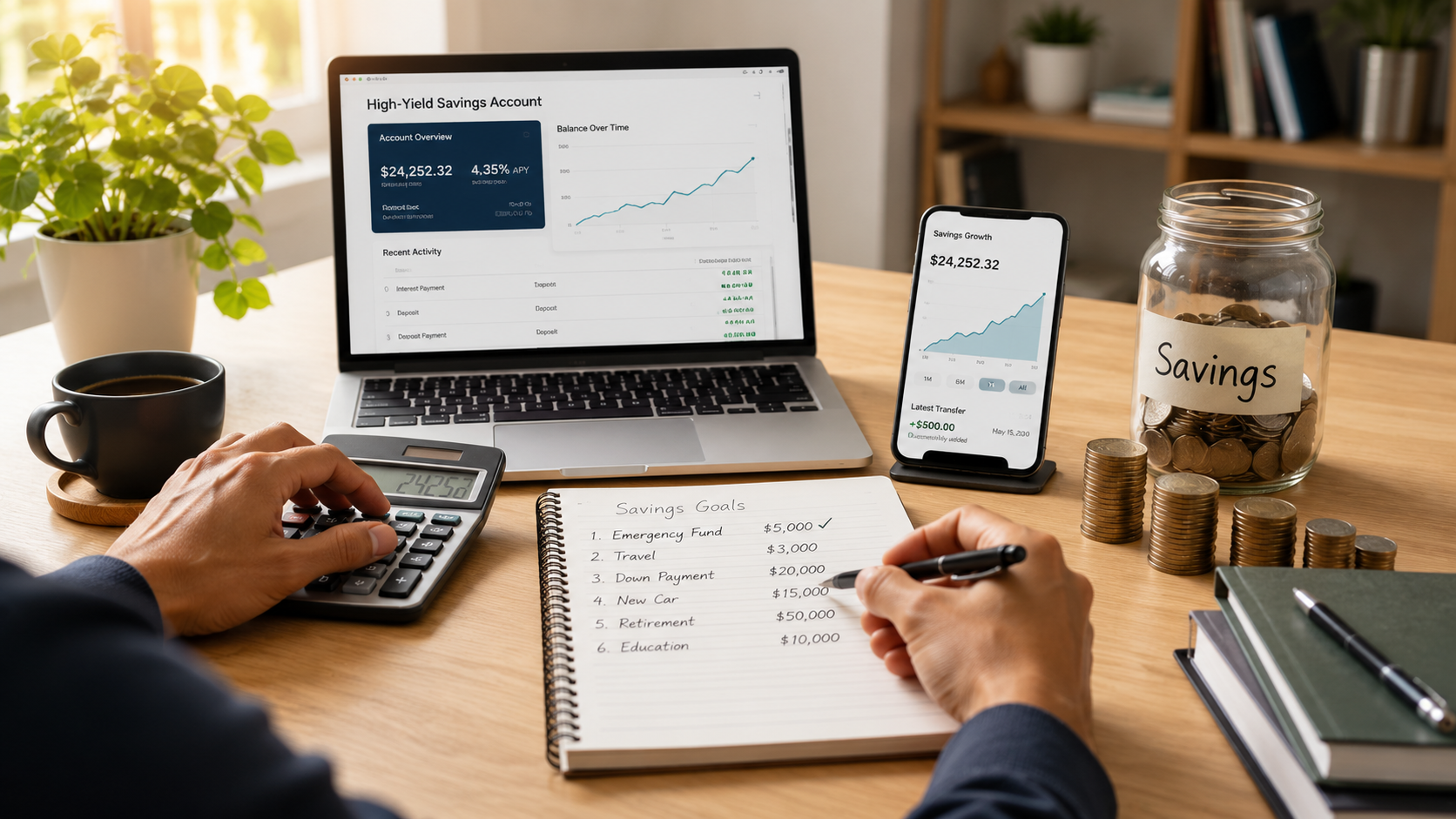
How Much Can a High-Yield Savings Account Earn by 2027?
Table of Contents
If you’re anything like me, you don’t want your savings sitting in an account that barely earns any interest. Every dollar should be working for you, even if you’re simply building an emergency fund or saving for a future purchase.
That’s why I’ve become a fan of using a high-yield savings account. It offers a safe place to store cash while earning significantly more interest than a traditional savings account. Although interest rates have started to decline, many high-yield accounts still offer annual percentage yields (APYs) above 4%, making them one of the smartest places to keep short-term savings.
Why I Still Like High-Yield Savings Accounts
A high-yield savings account combines security with competitive returns. Since these accounts are typically offered by FDIC-insured banks or NCUA-insured credit unions, your deposits remain protected within applicable insurance limits.
I also appreciate how flexible these accounts are. Unlike investments that can rise and fall with the market, my savings continue earning interest without worrying about stock market volatility.
Where High-Yield Savings Account Rates Stand Today
Traditional savings accounts continue to offer relatively low interest rates. According to FDIC data, the national average savings rate remains well below the rates offered by many online banks.
Fortunately, shopping around can make a huge difference. Many online banks and some credit unions continue offering APYs above 4%, which can be more than ten times higher than the average savings account.
Before opening an account, I always check whether the advertised rate requires:
- A minimum account balance
- Monthly direct deposits
- Recurring transactions
- Other qualification requirements
Many of the best accounts have no monthly fees and no complicated requirements, making them easy to maintain.
How Much Could You Earn by 2027?
One thing to remember is that high-yield savings account rates are variable. Banks can raise or lower their APYs whenever market conditions change, so nobody can predict the exact amount you’ll earn by 2027.
Still, using today’s rates gives us a reasonable estimate.
For example, if you deposit $10,000 into a high-yield savings account earning around 4% APY and leave the money untouched while interest compounds daily, your earnings can be hundreds of dollars higher than keeping that same money in a traditional savings account.
The biggest advantage comes from time. The longer your money stays invested, the more compound interest works in your favor.
Factors That Affect Your Earnings
- Your starting balance
- The account’s APY
- How often interest compounds
- Whether you make additional deposits
- Future interest rate changes
Even small monthly deposits can significantly increase your total interest over several years.
How I Find the Best High-Yield Savings Account
Whenever I compare savings accounts, I look beyond the headline interest rate. A slightly lower APY with fewer fees can sometimes be the better deal.
1. Compare Online Banks
Online banks usually have lower operating costs than traditional banks, allowing them to offer more competitive savings rates.
2. Don’t Ignore Credit Unions
Many credit unions reward members with attractive savings rates, lower fees, and better customer service.
3. Check for Sign-Up Bonuses
Some financial institutions offer cash bonuses for opening a new account. While I never choose an account based only on a bonus, it’s a nice extra benefit when paired with a strong APY.
4. Avoid Unnecessary Fees
Monthly maintenance fees can slowly reduce your earnings. I always look for accounts with no monthly service charges.
5. Read the Fine Print
An advertised APY may only apply if you maintain a certain balance or complete specific monthly activities. Reading the account details helps avoid surprises later.
Alternatives to a High-Yield Savings Account
A high-yield savings account isn’t the only option for growing your money. Depending on your goals, one of these alternatives may be a better fit.
Certificate of Deposit (CD)
Certificates of deposit offer fixed interest rates for a set period. If you don’t need immediate access to your money, locking in today’s rate can be beneficial, especially if market rates continue falling.
The trade-off is flexibility, since withdrawing money early usually results in a penalty.
Money Market Account
Money market accounts combine features of savings and checking accounts. Many include debit cards or check-writing privileges while still offering competitive interest rates.
Some accounts require larger opening deposits or higher minimum balances.
High-Yield Checking Account
Some checking accounts also pay interest on your balance. While they’re designed for everyday spending rather than long-term saving, earning interest on money you already use can be a nice bonus.
Just keep in mind that many of these accounts require monthly debit card transactions or direct deposits to qualify for their highest APY.
Final Thoughts
I believe a high-yield savings account remains one of the simplest and safest ways to grow your cash in 2026 and beyond. Even if interest rates continue to change, earning several times more than a traditional savings account can make a noticeable difference over time.
The key is choosing an account with a competitive APY, low fees, and terms that fit your financial habits. Whether you’re building an emergency fund, saving for a vacation, or planning a major purchase, letting your money earn more interest is always a smart move.