
Invest in Tokenized Gold: A Beginner’s Guide to Digital Gold Ownership
If you’re looking for a modern way to invest in tokenized gold, you’re not alone. As blockchain technology continues to evolve, more investors are exploring digital assets backed by physical gold. Tokenized gold combines the stability of precious metals with the convenience of digital ownership, creating a new option for people who want exposure to gold without storing physical bars or coins.
For centuries, gold has been viewed as a store of value and a hedge against economic uncertainty. Today, tokenization allows investors to buy, sell, and transfer ownership of gold using blockchain technology. While the concept may sound complicated at first, understanding how tokenized gold works is easier than many people think.
Table of Contents
- What Is Tokenized Gold?
- Why Investors Are Interested in Tokenized Gold
- How to Invest in Tokenized Gold
- Tokenized Gold vs Traditional Gold Investments
- Benefits and Risks of Tokenized Gold
- Practical Example of Tokenized Gold Investing
- Pros and Cons
- Comparison Table
- Frequently Asked Questions
- Conclusion
What Is Tokenized Gold?
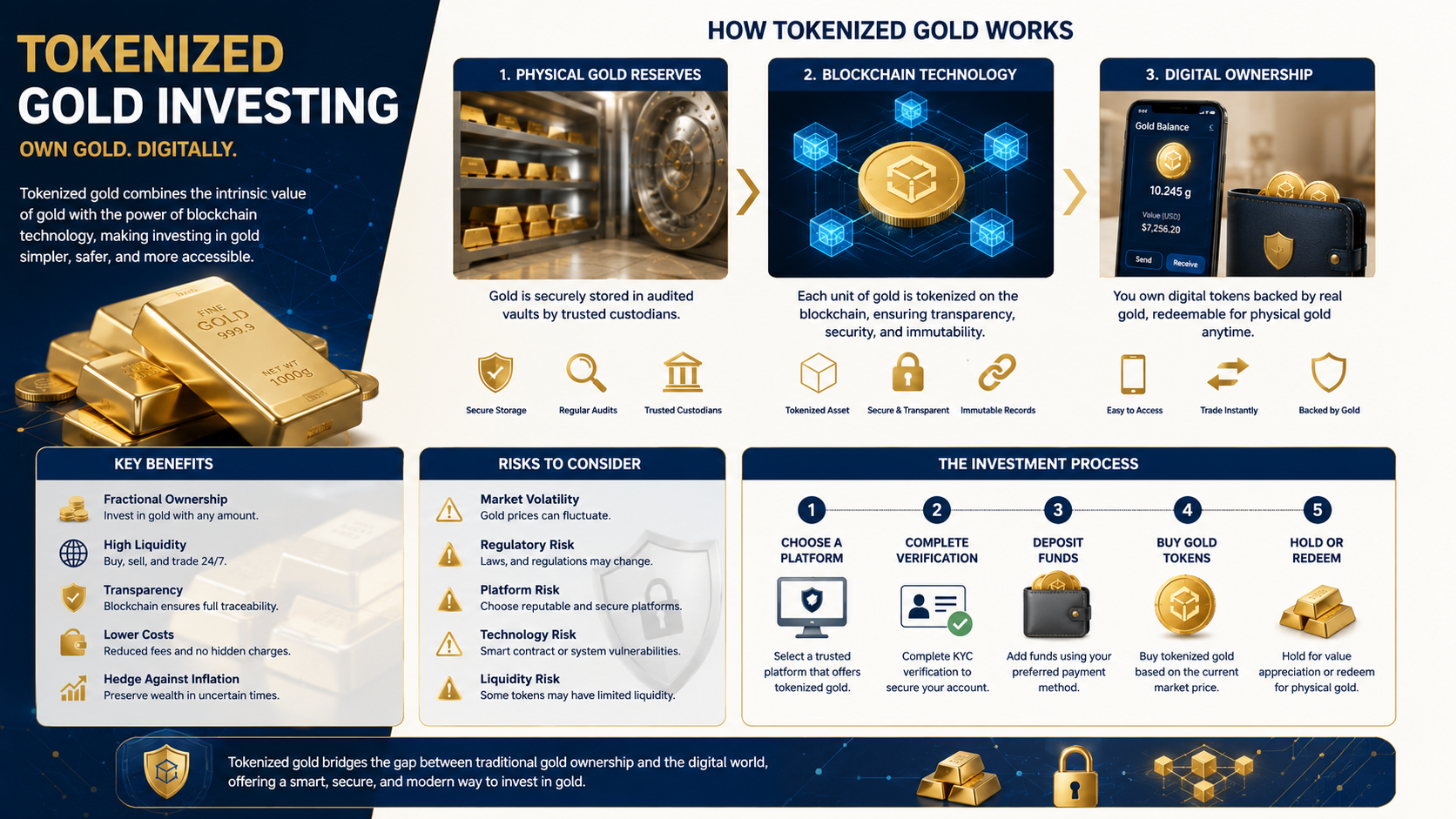
Tokenized gold is a digital asset that represents ownership of a specific amount of physical gold stored by a custodian. Each token is typically backed by real gold held in secure vaults.
Instead of purchasing physical gold bars, investors buy digital tokens that represent ownership rights. These tokens are usually recorded on a blockchain, providing transparency and easier transferability.
Depending on the provider, each token may represent one gram, one ounce, or another standardized amount of gold.
Why Investors Are Interested in Tokenized Gold
Traditional gold investing often comes with challenges such as storage costs, insurance requirements, and transportation concerns. Tokenized gold attempts to solve some of these issues.
Several factors attract investors:
- Fractional ownership
- Easier trading
- Blockchain transparency
- Global accessibility
- Potentially lower storage concerns
Many investors appreciate the ability to buy small amounts of gold without needing to purchase entire bars or coins.
How to Invest in Tokenized Gold
Before you invest in tokenized gold, it is important to understand the process and evaluate potential providers carefully.
Choose a Reputable Platform
Not all tokenized gold projects are the same. Research providers carefully and look for transparency regarding gold reserves, auditing procedures, custody arrangements, and redemption policies.
Understand Custody and Auditing
A trustworthy provider should clearly explain where the physical gold is stored and whether independent audits verify reserves.
Regular audits help increase confidence that tokens are backed by actual gold holdings.
Create an Account
Most platforms require identity verification before allowing purchases. This process often includes standard Know Your Customer (KYC) procedures.
Purchase Gold Tokens
Once verified, investors can purchase tokens using supported payment methods or cryptocurrencies, depending on the platform.
Monitor Your Investment
Like any investment, monitoring performance and understanding market conditions remains important.
Tokenized Gold vs Traditional Gold Investments
Both approaches offer exposure to gold, but they differ in several important ways.
Physical Gold
- Direct ownership of tangible assets
- Requires storage and security
- Can involve higher transaction costs
- No dependence on digital platforms
Tokenized Gold
- Digital ownership representation
- Easier transfer and trading
- Fractional investment opportunities
- Relies on platform infrastructure and custodians
The right option depends on individual goals, preferences, and risk tolerance.
Benefits and Risks of Tokenized Gold
Potential Benefits
Many investors choose tokenized gold because of convenience and accessibility.
- Lower entry barriers
- Fractional investing
- Simplified ownership transfers
- Blockchain recordkeeping
- Potentially improved liquidity
Potential Risks
While tokenized gold offers advantages, investors should also understand possible risks.
- Counterparty risk
- Platform security concerns
- Regulatory uncertainty
- Custodian dependence
- Technology-related risks
Conducting due diligence remains essential before investing.
Practical Example of Tokenized Gold Investing
Imagine an investor who wants exposure to gold but cannot afford a full gold bar. Instead of purchasing physical gold, they buy a small amount of tokenized gold representing fractional ownership.
As gold prices increase, the value of their tokens may increase as well. They can monitor holdings online and potentially trade or redeem tokens based on the provider’s rules.
This example illustrates how tokenization can make precious metal investing more accessible to a broader audience.
Pros and Cons
Pros
- Accessible to smaller investors
- Fractional ownership available
- Easier buying and selling
- Blockchain transparency
- No need for personal storage
Cons
- Dependence on third-party providers
- Regulatory considerations
- Technology risks
- Potential liquidity differences between platforms
- Not identical to holding physical gold directly
Comparison Table
| Feature | Tokenized Gold | Physical Gold |
|---|---|---|
| Ownership | Digital representation | Direct physical ownership |
| Storage | Custodian-managed | Investor-managed |
| Accessibility | High | Moderate |
| Fractional Investing | Common | Limited |
| Transferability | Fast digital transfers | Physical transfer required |
Frequently Asked Questions
1. Is tokenized gold backed by real gold?
Many tokenized gold projects claim to back tokens with physical gold reserves. Investors should verify auditing and custody details independently.
2. Can beginners invest in tokenized gold?
Yes. Many platforms allow fractional purchases, making tokenized gold accessible to smaller investors.
3. Is tokenized gold safer than cryptocurrency?
Tokenized gold is linked to physical gold, but it still carries platform, custody, and regulatory risks. Safety depends on multiple factors.
4. Can tokenized gold be redeemed for physical gold?
Some providers offer redemption options, but policies vary significantly between platforms.
5. Is tokenized gold a replacement for physical gold?
Not necessarily. Some investors prefer direct ownership, while others value the convenience of digital access.
Conclusion
Choosing to invest in tokenized gold can offer a modern way to gain exposure to one of the world’s most recognized stores of value. By combining blockchain technology with physical gold backing, tokenized gold aims to provide greater accessibility, flexibility, and convenience for investors.
However, like any financial product, it is important to understand the risks, research providers carefully, and ensure the investment aligns with your personal financial goals. With proper due diligence, tokenized gold may serve as one component of a diversified investment strategy.