
The Ultimate Guide to Small Business Financial Planning
Starting a company is an exciting journey filled with passion and innovation, but passion alone will not keep the lights on. If you want your company to thrive and grow, mastering small business financial planning is the most important step you can take. Far too many brilliant entrepreneurs fail simply because they run out of cash or misunderstand their true operating costs right from the start.
If looking at spreadsheets makes you feel stressed, you are not alone. Finance can seem like a daunting, complicated language. But it does not have to be. In this complete, beginner-friendly guide, we will break down the mysteries of managing your company’s money. By the end of this article, you will have a clear, actionable roadmap to keep your business profitable and secure.
Table of Contents
What is Small Business Financial Planning?
At its core, small business financial planning is the process of mapping out how your company will manage its money to achieve its short-term and long-term goals. It is about looking at the big picture rather than just checking your bank balance day-to-day.
While basic accounting is about looking backward (recording what you have already spent and earned), true small business financial planning is all about looking forward. It involves estimating your future sales, predicting your upcoming expenses, and creating a solid strategy to ensure you always have enough cash on hand to operate smoothly. Think of it as a GPS for your business.
Why Small Business Financial Planning Matters
You might be thinking, “I am just a one-person shop, do I really need a formal plan?” The short answer is yes. Regardless of your size, a solid strategy is your best defense against failure.
Here are a few reasons why dedicating time to small business financial planning is absolutely non-negotiable for success:
- Cash Flow Survival: Cash is the oxygen of your business. A good plan ensures you know exactly when money is coming in and when bills are due.
- Smarter Decision Making: Should you hire a new employee? Can you afford a new piece of equipment? A financial plan provides hard numbers so you can make decisions based on facts.
- Attracting Investors: If you ever need to apply for a business loan, banks will demand to see your small business financial planning documents to prove your business is safe.
- Risk Management: The market changes and unexpected costs arise. Planning ahead allows you to build a safety net to weather economic storms.
The Core Components of a Financial Plan
To demystify the process, let’s look at the actual documents and concepts that make up a healthy strategy. You do not need an MBA to understand these elements.
The Profit and Loss Statement (P&L)
Also known as an income statement, this document summarizes your revenues, costs, and expenses over a specific period. It shows you exactly whether your business is operating at a profit or a loss.
The Cash Flow Projection
This is arguably the most critical tool for a startup. A cash flow projection anticipates the actual cash coming into and going out of your bank account. Making a sale today does not always mean you get the cash today.
The Balance Sheet
Your balance sheet is a snapshot of your company’s financial health at a specific moment in time. It lists your assets, your liabilities, and your equity, helping you determine the net worth of your enterprise.
5 Steps for Small Business Financial Planning
Ready to put theory into practice? Here is a step-by-step framework to kickstart your small business financial planning journey and get your accounts in order.
- Set Clear Strategic Goals: Start with the end in mind. Do you want to double your revenue next year? Your financial plan needs concrete goals to build a budget around.
- Forecast Your Sales: Estimate how much money you expect to bring in over the next 12 months. Base this on past performance and market trends.
- Budget Your Expenses: Break your costs down into two categories: fixed and variable. Knowing your total costs helps you determine your break-even point.
- Plan for Contingencies: What happens if a major client leaves? Part of good small business financial planning is building an emergency fund into your budget.
- Review and Adjust Regularly: A plan is not a “set it and forget it” document. Compare your actual numbers against your projections at the end of every month.
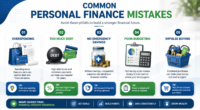
Common Financial Mistakes to Avoid
As you build your strategy, be careful to avoid these common traps that trip up many new business owners during their early days:
- Mixing Personal and Business Funds: Never use your personal checking account for business expenses. Open a dedicated business bank account on day one.
- Ignoring Taxes: Your revenue is not all yours to keep. Failing to set aside a portion of your income for quarterly taxes will lead to massive penalties.
- Failing to Pay Yourself: Proper small business financial planning includes a reasonable salary for yourself to avoid personal burnout.
Conclusion: Start Your Small Business Financial Planning Today
Managing money does not have to be the scariest part of being an entrepreneur. By fully embracing small business financial planning, you are taking proactive steps to protect your dream and ensure sustainable growth. It takes a little bit of time and discipline to set up, but the peace of mind it brings is invaluable.
Start small today. Track your expenses and forecast your sales for the next month. As you get more comfortable with the numbers, you will find yourself making smarter, more confident decisions that drive your business forward.