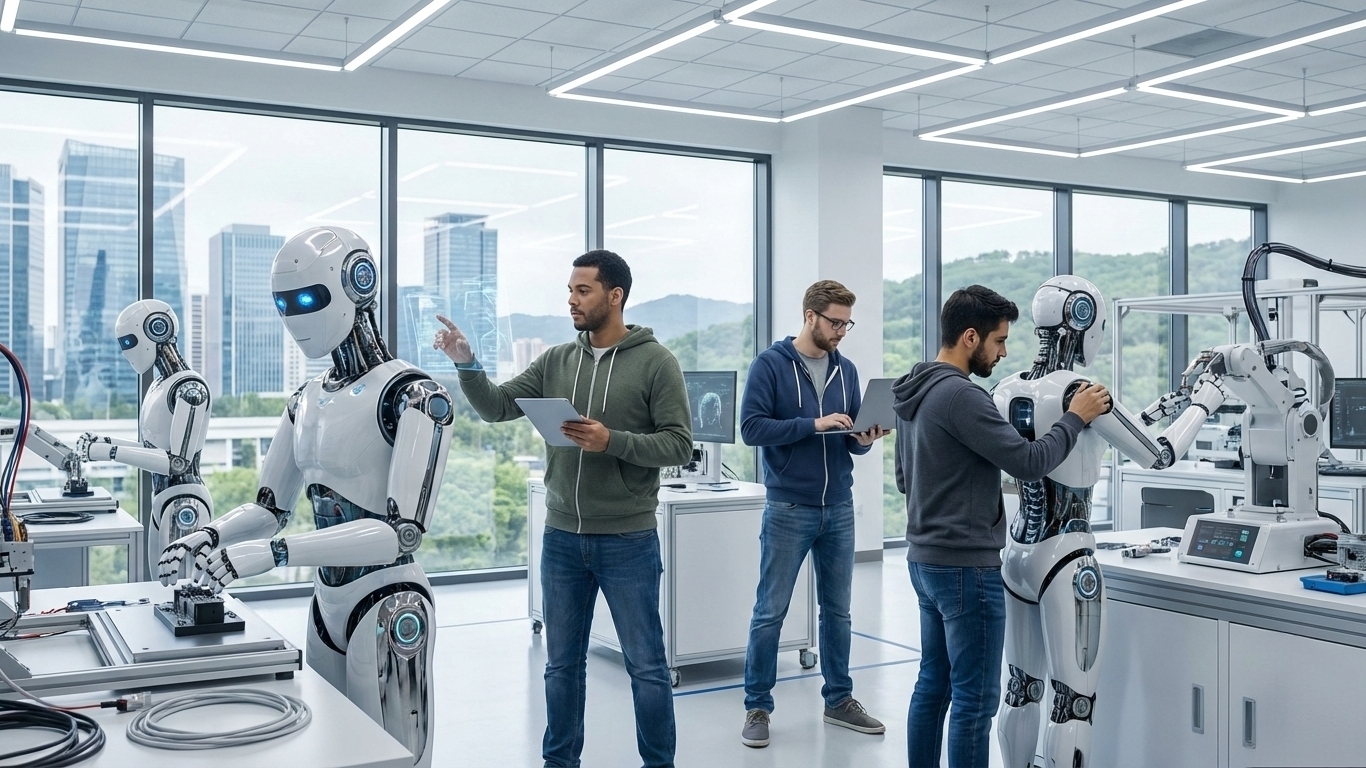

Humanoid Robots Silicon Valley: The Future Is Taking Shape
Introduction
The idea of robots that look, move, and work like humans once belonged to science fiction. Today, Humanoid Robots Silicon Valley projects are turning that imagination into reality. From warehouse helpers to personal assistants, human-shaped robots are slowly stepping out of labs and into everyday life. Silicon Valley, known for transforming bold ideas into global technologies, is now leading the push toward humanoid robotics.
Why Silicon Valley Leads Humanoid Robotics
Silicon Valley has always been a place where innovation thrives, and humanoid robots are no exception. The region combines cutting-edge AI research, massive funding opportunities, and a culture that embraces risk. This unique mix allows companies to experiment quickly, fail fast, and improve faster.
Another reason Humanoid Robots Silicon Valley projects grow rapidly is access to talent. Engineers, roboticists, and AI researchers from around the world come here to work on the next big thing. When advanced software meets powerful hardware, progress accelerates.
Key Companies Building Humanoid Robots
Several startups and tech giants are shaping the humanoid robot landscape. Companies backed by major investors are building robots designed to walk, lift objects, and interact naturally with people. Some focus on industrial tasks, while others aim for home assistance or healthcare support.
What makes Humanoid Robots Silicon Valley companies stand out is their focus on practical deployment. Instead of flashy demos, many are training robots to perform repetitive, physically demanding jobs where human labor is scarce.
Real-World Uses of Humanoid Robots
Humanoid robots are being designed to fit into spaces built for humans. This makes them ideal for warehouses, factories, hospitals, and even offices. They can move through hallways, climb stairs, and use tools made for human hands.
In Silicon Valley, companies are testing humanoid robots for logistics, elder care assistance, and customer service. The long-term vision of Humanoid Robots Silicon Valley is not replacing people, but supporting them by handling physically demanding or repetitive tasks.
Challenges Facing Humanoid Robots
Despite rapid progress, humanoid robots still face serious challenges. Building machines that balance, adapt, and understand human environments is incredibly complex. Power consumption, safety, and cost remain major concerns.
There are also ethical and social questions. As Humanoid Robots Silicon Valley projects advance, companies must consider job displacement, privacy, and human-robot interaction boundaries.
What the Future Holds
The future of humanoid robots looks promising but gradual. Experts believe we will first see robots working behind the scenes before they become common in homes. Improvements in AI, sensors, and battery technology will continue to push capabilities forward.
Silicon Valley will likely remain the center of this evolution, setting standards for how humanoid robots integrate into society.
Conclusion
Humanoid Robots Silicon Valley is more than a tech trend—it represents a shift in how humans and machines may work together in the future. While challenges remain, the progress happening today suggests humanoid robots will soon play a meaningful role in everyday life. With careful development and responsible innovation, Silicon Valley’s humanoid robots could redefine productivity, assistance, and human potential.