AI Race Between US and China: Why America Still Leads—and What Could Change
Table of Contents
Lately, I’ve been seeing a lot of headlines about China overtaking the United States in different technologies. Electric vehicles, clean energy, drones—you name it. So I started wondering: is the same thing happening with artificial intelligence?
The answer surprised me. When it comes to the AI race between US and China, America is still ahead—but not by as much as people might think.
Why Semiconductors Matter More Than Ever
If there’s one thing I’ve learned, it’s this: AI isn’t just about smart software. It’s powered by incredibly advanced computer chips.
These chips are the backbone of everything from chatbots to cybersecurity systems. Without them, even the most advanced AI models simply wouldn’t exist.
Right now, the United States—working closely with partners in Europe and Asia—produces the most advanced chips in the world. That advantage has quietly shaped everything from big tech success to national defense.
How the US Built Its Lead
What really stands out to me is how much of this lead didn’t happen by accident. It came from years of smart decisions and cooperation.
The US government, across different administrations, has limited the sale of its most advanced chips to China. These export controls have slowed China’s progress in a big way.
Even leaders in China’s tech industry have admitted that access to cutting-edge chips—not money—is their biggest challenge.
That says a lot.
China’s Push to Catch Up
That said, China isn’t standing still.
They have some real advantages:
- A massive pool of engineers and scientists
- Huge investments in infrastructure and energy
- A strong push from the government to dominate AI
I’ve noticed that their AI models are improving quickly. Some are already competing with top US systems in certain areas.
Still, when it comes to the most powerful chips, they’re not quite there yet.
What Could Put America’s Lead at Risk
Here’s where things get complicated—and honestly, a bit concerning.
Some US companies want to sell more advanced chips to China. From a business perspective, that makes sense. But from a bigger-picture view, it could backfire.
If China gains access to top-tier chips, it could speed up their AI development dramatically.
And we’re not just talking about better apps or smarter assistants. Advanced AI can impact:
- Cybersecurity
- Military systems
- Critical infrastructure like power grids and hospitals
I came across an example of a powerful AI model that helped developers fix more bugs in a month than they had all year. That’s amazing—but also a little scary when you think about how it could be used in the wrong hands.
Why Policy Decisions Matter More Than You Think
One thing I didn’t fully appreciate before is how much government policy shapes the tech world.
Decisions about export controls, partnerships, and regulations can either protect a lead—or slowly give it away.
Right now, there’s concern that easing restrictions on chip exports could weaken the US position. Even small changes can have long-term effects.
Another issue is loopholes. For example, companies might try to access advanced chips through third countries. That’s something policymakers are still trying to manage.
What Happens Next?
If you ask me, this isn’t just a tech story—it’s a turning point.
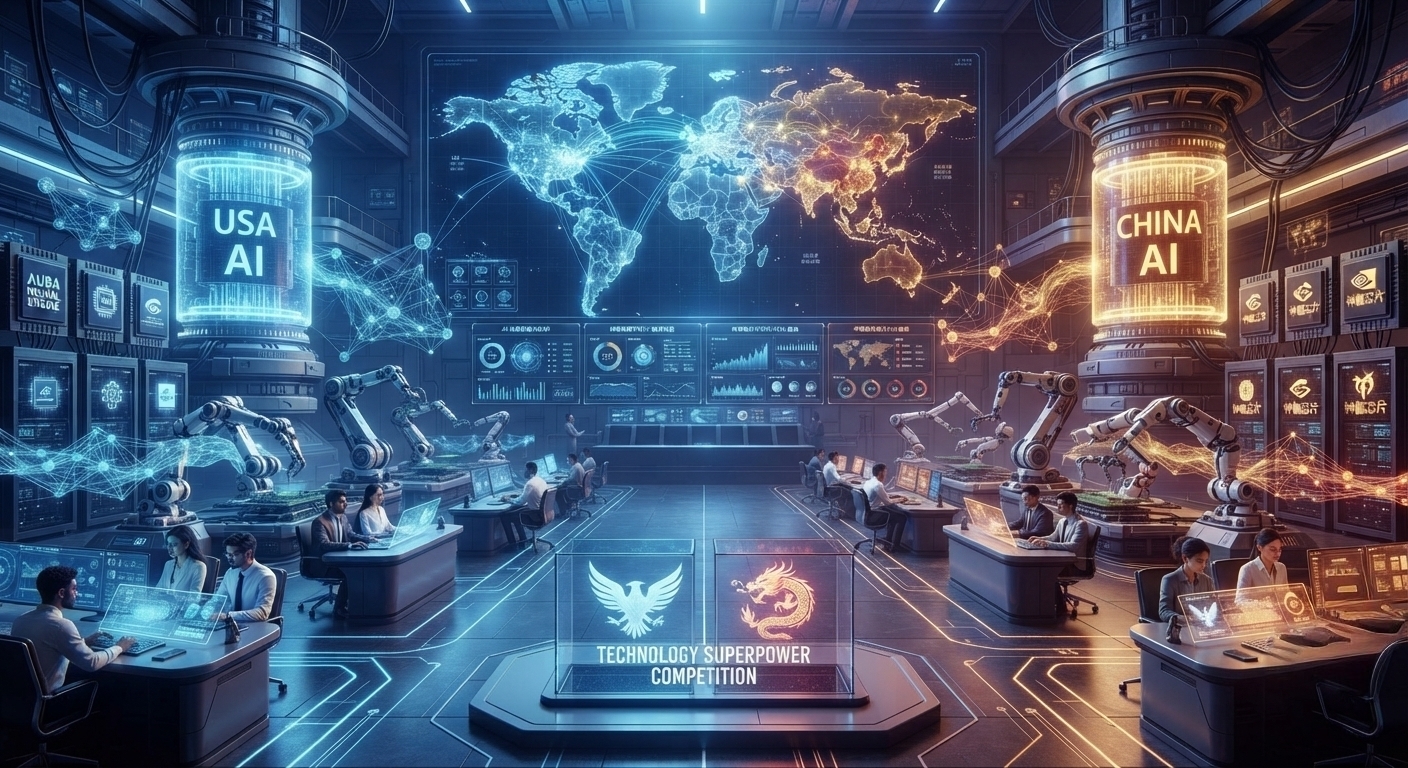
The US still has the edge in the AI race between US and China, especially because of its semiconductor strength and global partnerships. But that lead isn’t guaranteed.
History has shown that even strong advantages can disappear if they’re taken for granted.
For now, I think the focus should be on protecting what’s already working while continuing to innovate. Because once that lead is gone, it’s much harder to get back.
And in a world where AI is shaping everything from our jobs to our security, that’s not a risk worth taking lightly.