Google Gemini AI Copyright Lawsuit: What’s Really Going On?
Table of Contents
Introduction
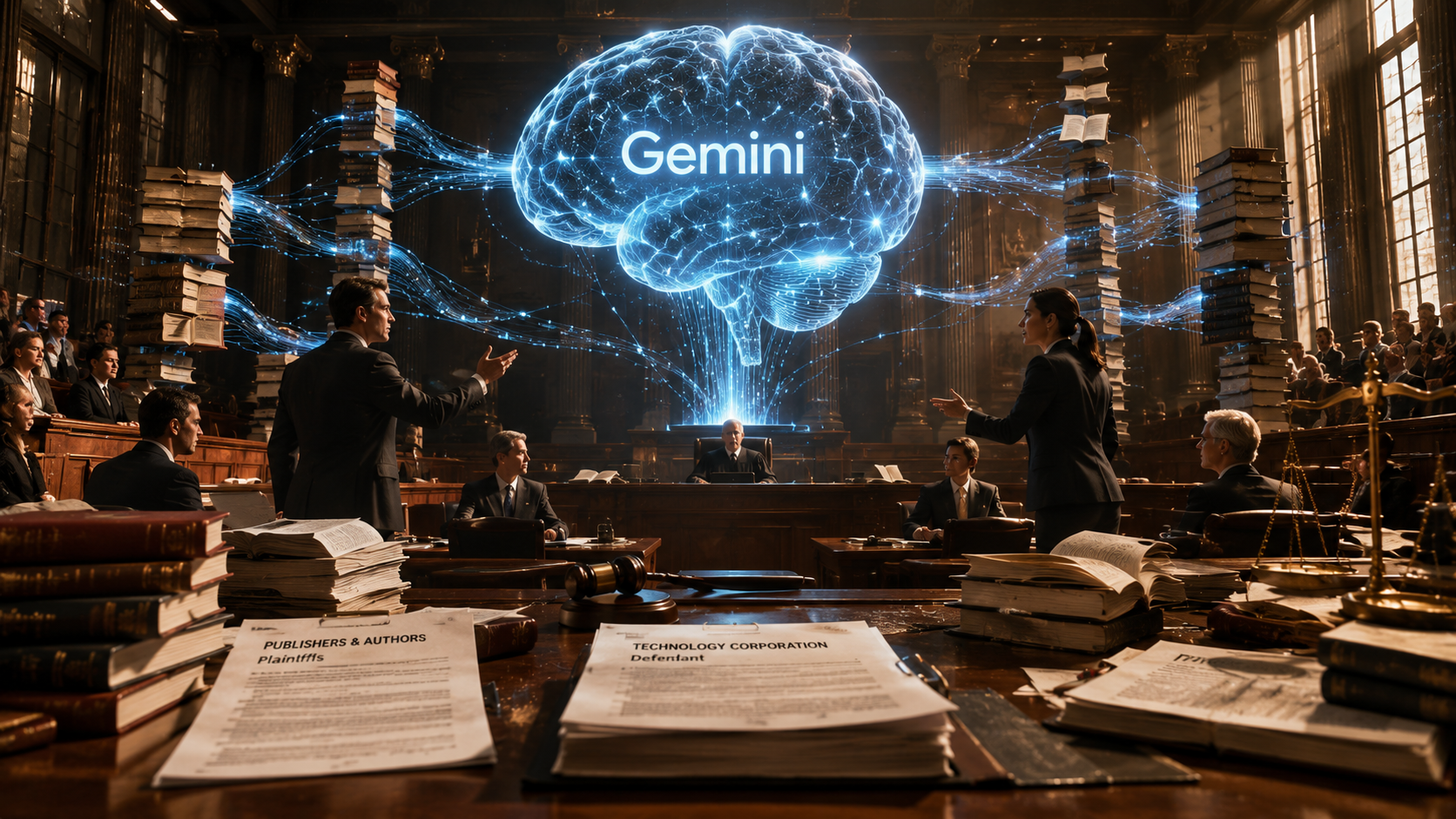
I’ve been following the rapid rise of AI for a while now, and honestly, it feels like something new—and controversial—pops up every week. This time, it’s a major legal battle involving Google and some of the biggest names in publishing. The Google Gemini AI copyright lawsuit is raising serious questions about how AI models are trained and whether creators are being treated fairly.
Why Publishers Are Suing Google
A group of major publishers, including Hachette Book Group, Cengage Learning, and Elsevier, have taken Google to court. They claim that Google used millions of copyrighted books without permission to train its Gemini AI models.
From what I understand, these books were originally provided to Google for specific services like searchable previews or ebook sales. But according to the lawsuit, Google allegedly went far beyond those limits and used the content to build a commercial AI system.
The publishers aren’t holding back either—they’ve described this as one of the largest copyright violations in history.
What the Lawsuit Claims
The details of the case are pretty intense. The publishers argue that Google:
- Copied copyrighted books without permission
- Used them to train Gemini AI models
- Did not compensate authors or publishers
What really caught my attention is that the lawsuit claims Google was aware of the legal risks. Internal discussions reportedly mentioned the possibility of massive fines—potentially reaching tens of billions of dollars.
Even more concerning, the publishers argue that AI can now generate full-length content in minutes at a very low cost. Imagine a 100-page novel created in under half an hour. That’s a direct threat to traditional authors who spend months or years writing a single book.
This is where things get personal. If AI tools can generate books instantly, what happens to the people who actually write them?
From my perspective, this isn’t just about one lawsuit—it’s about the future of creative work. Authors rely on book sales for income, and if AI-generated content floods the market, it could seriously reduce their earning potential.
The lawsuit even points out that AI-generated stories could replace original works, making it harder for writers to compete.
The Bigger AI Copyright Battle
This case isn’t happening in isolation. There’s a growing wave of lawsuits against major AI companies like OpenAI, Meta, and Anthropic. Everyone seems to be asking the same question: Is it okay to train AI using copyrighted material without permission?
I’ve also seen protests from authors—some even released “empty books” to highlight how their work is being used without consent. That really shows how serious this issue has become.
In another case, one AI company agreed to pay a massive settlement to authors. So clearly, the legal system is starting to take this seriously.
Final Thoughts
At the end of the day, the Google Gemini AI copyright lawsuit could shape the future of AI and creative industries. If the publishers win, it might force tech companies to rethink how they train their models. If not, we could be heading toward a world where human-created content is competing directly with machines trained on that very same work.
Personally, I think there needs to be a balance. AI is powerful and exciting, but it shouldn’t come at the cost of the people who create the content it learns from.
What do you think—should AI companies pay for the data they use, or is this just part of technological progress?